


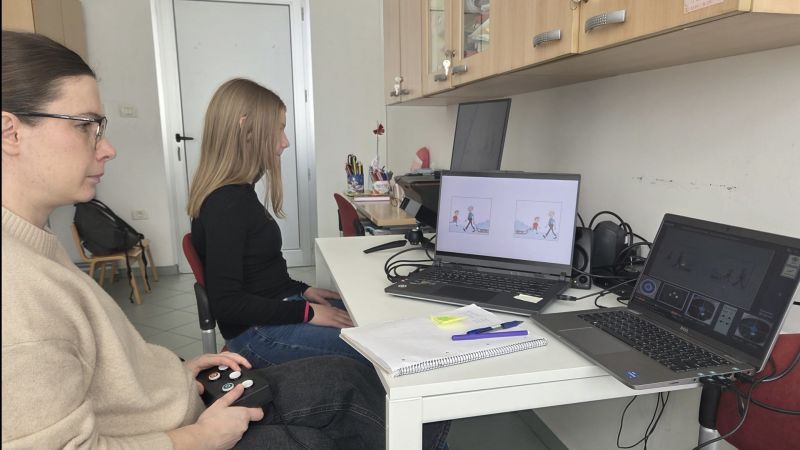
The international postdoctoral researcher Dr. Sara Košutar, affiliated with the Department of Language and Culture at the Faculty of Humanities, Social Sciences and Education of UiT The Arctic University of Norway in Tromsø (Norway), has undertaken a research stay at the Research Centre for the Linguistic and Cultural Heritage of Istria at the Faculty of Humanities in Pula from 4 February 2026 to 6 March 2026, within the field research activities of the project Cross-linguistic Influence during Real-time Processing in Child Heritage Speakers – CLEAR (HORIZON-MSCA-2023-PF-01-101154247).
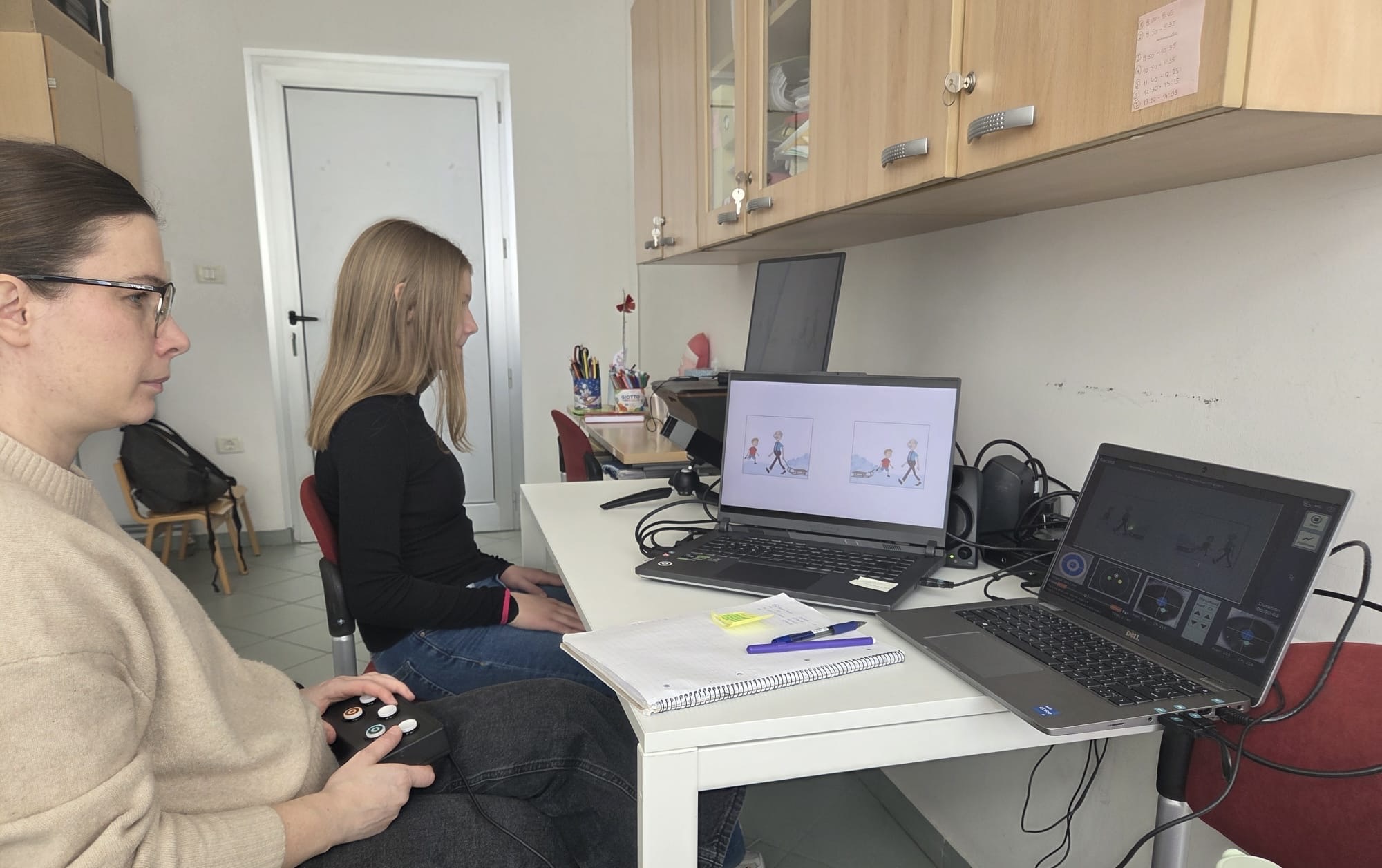
The international research project CLEAR is funded by the European Commission for Research and Innovation within the Horizon Europe programme, through the Marie Skłodowska-Curie Actions (MSCA) Postdoctoral Fellowship awarded to Dr. Sara Košutar as principal investigator following a competitive selection procedure for postdoctoral training at the Department of Language and Culture at UiT The Arctic University of Norway (18 September 2024 – 17 September 2027). The primary aim of the Marie Skłodowska-Curie Actions (MSCA) is to support excellent and innovative research conducted by highly qualified early-career researchers, while promoting international, interdisciplinary and intersectoral mobility and fostering the circulation of knowledge within the European Research Area. UiT The Arctic University of Norway serves as the host institution responsible for the administrative and scientific coordination of the project, as well as for the implementation and documentation of all planned research activities. The project is supervised by two mentors, Professor Marit Westergaard, a distinguished Norwegian linguist and internationally recognized expert in child language acquisition, and Associate Professor Natalia Mitrofanova, a specialist in research methodologies for child language studies. The field research activities of the CLEAR project are conducted in collaboration with the researchers of the Centre for Research on the Linguistic and Cultural Heritage of Istria: the Director of the Centre, Associate Professor Nada Poropat Jeletić from the Faculty of Humanities in Pula and Dr Renata Martinčić Marić, lecturer at the Faculty of Educational Sciences in Pula. The project activities, including participant recruitment, data collection and dissemination activities, also involved the participation of Arlene Kauzlarić Ocovich, MA in Italian Philology, teacher at the Italian primary school TOŠ-SEI “Edmondo De Amicis” in Buje-Buie, alumna of the Department of Italian studies of the Faculty of Humanities in Pula. The CLEAR project addresses fundamental questions related to bilingual development by examining how bilingual children of different age groups comprehend language during implicit real-time language processing. The central research question concerns the existence of cross-linguistic influence in the implicit processing of language in bilingual children. More specifically, the project investigates whether similarities and differences between the linguistic systems acquired by the child influence language processing mechanisms and consequently shape language development. Research on implicit language processing in bilingual children remains relatively limited at the international level and is virtually non-existent in the Croatian research context. The project also makes an important contribution by involving Croatian-Italian bilingual children from Istria aged between 6 and 14 years. Croatian-Italian bilingualism in Istria represents one of the rare cases of historically rooted and legally recognised societal bilingualism, providing a unique sociolinguistic context for examining how sustained contact between two typologically distinct languages – Croatian as a Slavic language and Italian as a Romance language – affects bilingual language development. The scientific findings expected from this research will contribute to the development of more effective tools for language teaching and language assessment in the Istrian bilingual context, providing valuable resources for teachers, speech-language therapists and psychologists working with bilingual children. The research activities planned during Dr Košutar’s stay include a preliminary phase of pre-testing general language abilities through lexical and grammatical tasks, a narrative task based on pictorial stimuli, and a set of cognitive tasks. The main experimental phase involves children participating in language processing tasks conducted using eye-tracking technology. The eye-tracking method is completely non-invasive and is widely used in experimental research involving children. During the experiment, participants observe images presented on a computer screen while listening to spoken sentences, while the eye-tracking device records eye movements and automatically converts them into numerical data for further analysis. All research activities are conducted in full compliance with the ethical principles outlined in the Ethical Code for Research with Children (Ajduković and Keresteš, 2020). Furthermore, the ethical standards of the research were assessed and approved during the European Commission’s project evaluation process and subsequently confirmed by the Ethics Committee of UiT The Arctic University of Norway.

.jpeg)


Faculty of Humanities in Pula
A: Negrijeva 6, 1. kat
52 100 Pula
Hrvatska
T: +385 (52) 877 436, 099 5342 557
F: +385 211 713
E: ffpu-ured@unipu.hr
W: ffpu.unipu.hr


 Pristupačnost