


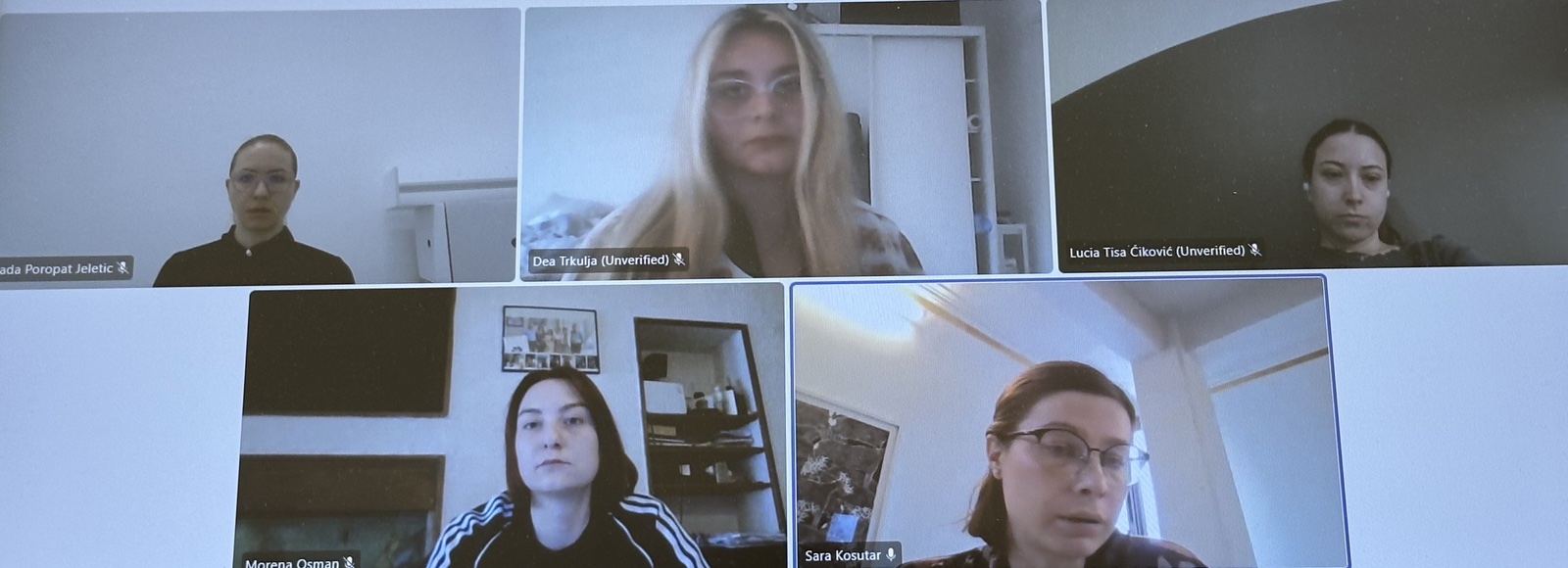
On Monday, 30 March 2026, within the activities of the Research Centre for the Linguistic and Cultural Heritage of Istria at the Faculty of Humanities of the Juraj Dobrila University of Pula, Dr. Sara Košutar (UiT The Arctic University of Norway) held an online specialised workshop entitled “Coding Principles in the CHAT System within the CLAN Program”.
The workshop was intended for researchers and students engaged in the construction and analysis of spoken language corpora, with particular emphasis on participants involved in the project Neurocognitive Abilities and Early Bilingual Development: Language Exposure and Executive Functions – NeuroLEEF (European Union, NextGenerationEU). The participants are actively involved in project activities encompassing the transcription and analysis of linguistic data collected from children in multilingual environments. The audio recordings employed in the workshop were collected at the “Edmondo De Amicis” Primary School in Buje within the international scientific research project Cross-linguistic Influence during Real-time Language Processing in Child Heritage Speakers – CLEAR, funded by the European Commission for Research and Innovation under the Horizon Europe programme, Marie Skłodowska-Curie Actions (MSCA), under the scientific coordination of Dr. Sara Košutar (UiT The Arctic University of Norway), and gathered by professor Arlene Kauzlarić Ocovich.
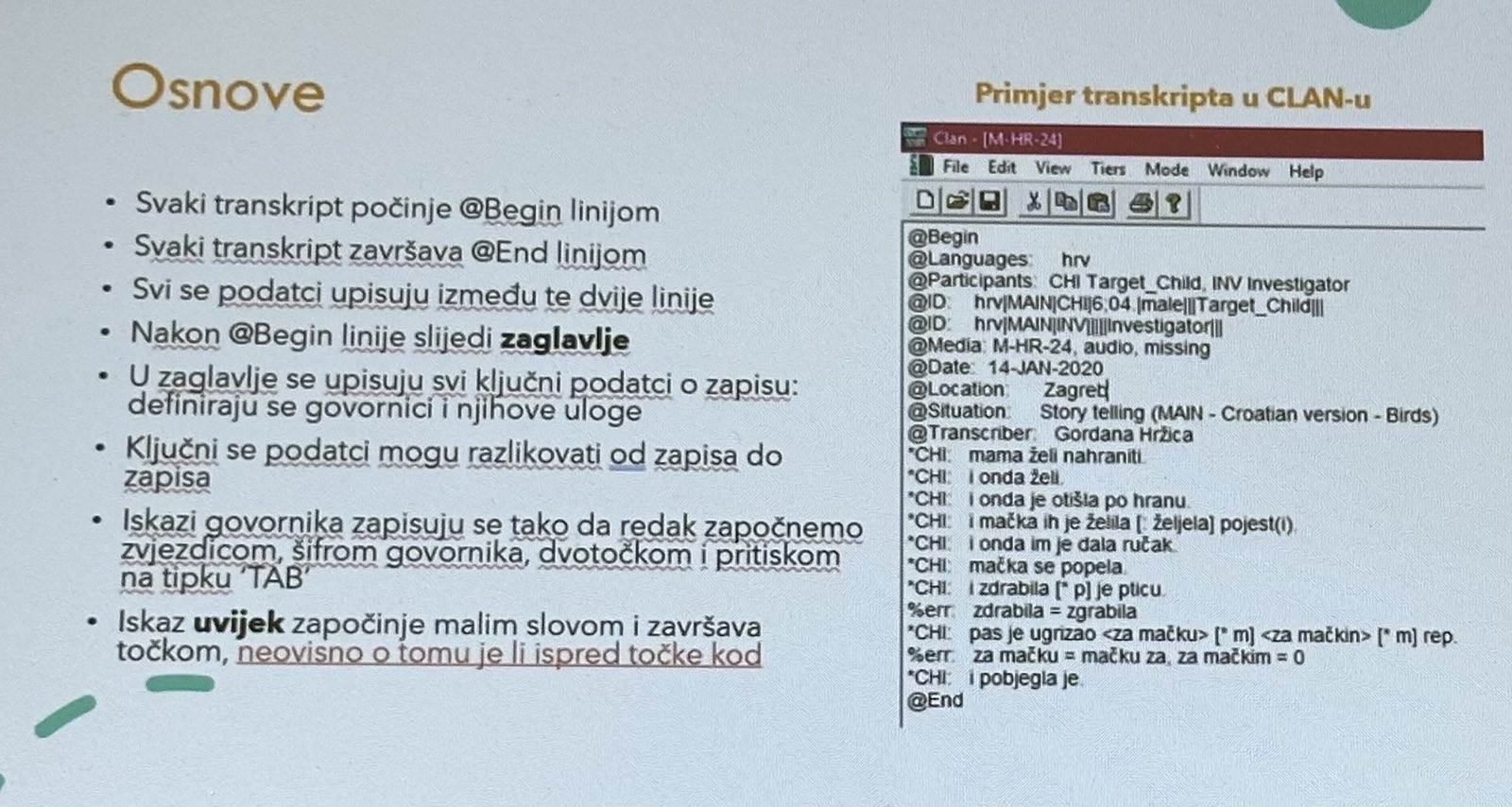
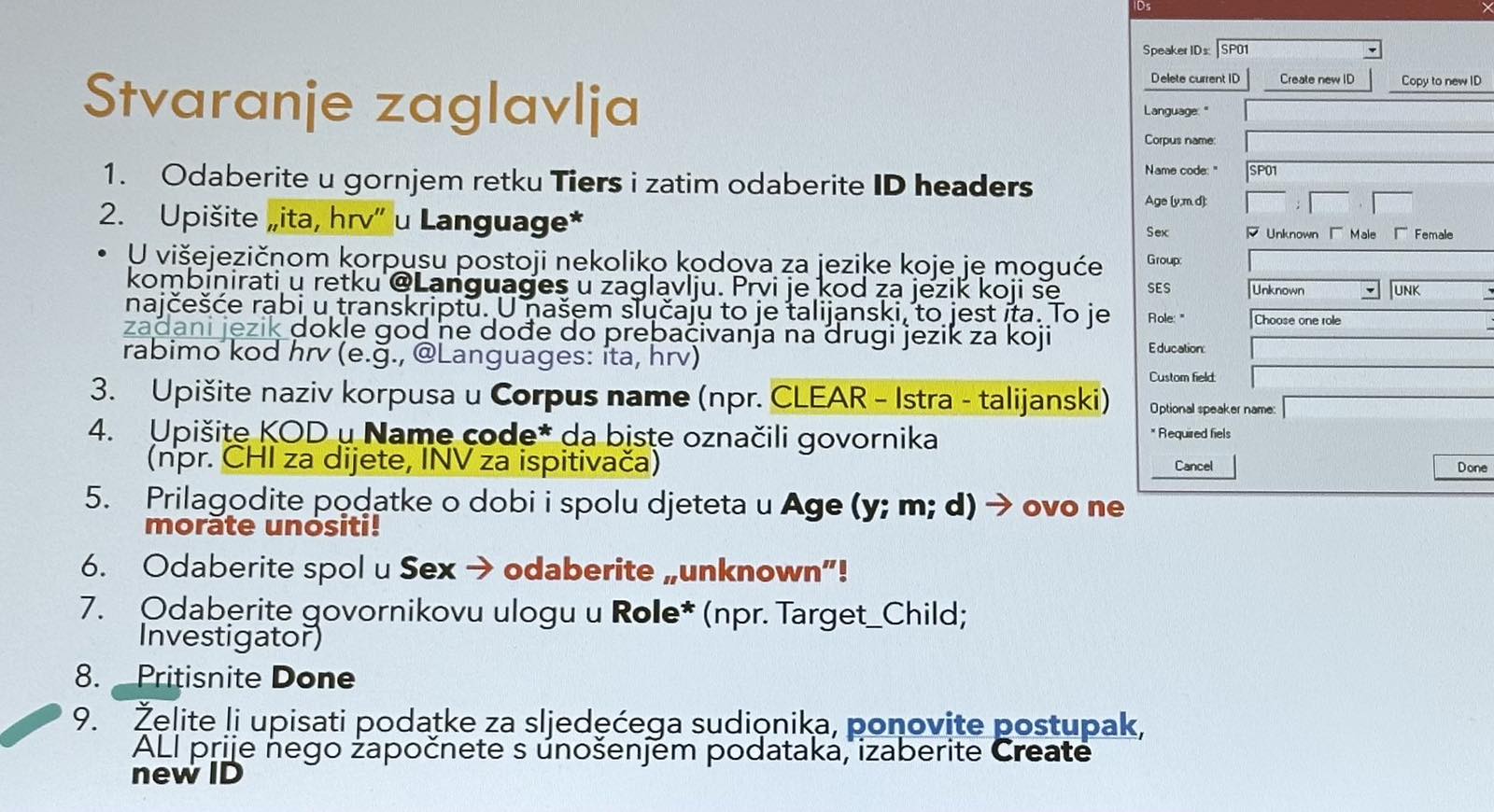
In terms of content, the workshop provided a systematic and methodologically rigorous overview of the standardised transcription system CHAT (Codes for the Human Analysis of Transcripts) and its implementation within the CLAN (Computerized Language Analysis) environment, a core analytical tool within the TalkBank infrastructure. Particular attention was devoted to transcript structuring, the segmentation of spoken discourse through communicative units (C-units), the accurate representation of paralinguistic features and discourse phenomena, the identification and coding of linguistic errors (phonological, morphosyntactic and lexical), as well as the annotation of sociolinguistic variation and code-switching in multilingual contexts. The principal value of the workshop lay in its immediate applicability to empirical research, given that the procedures presented adhere to internationally recognised standards, thereby ensuring interoperability and comparability of data within global corpus resources. The workshop was conducted in a highly interactive atmosphere, enabling participants to further develop the methodological competences essential for contemporary research in psycholinguistics, bilingualism and spoken language analysis.



Faculty of Humanities in Pula
A: Negrijeva 6, 1. kat
52 100 Pula
Hrvatska
T: +385 (52) 877 436, 099 5342 557
F: +385 211 713
E: ffpu-ured@unipu.hr
W: ffpu.unipu.hr


 Pristupačnost