


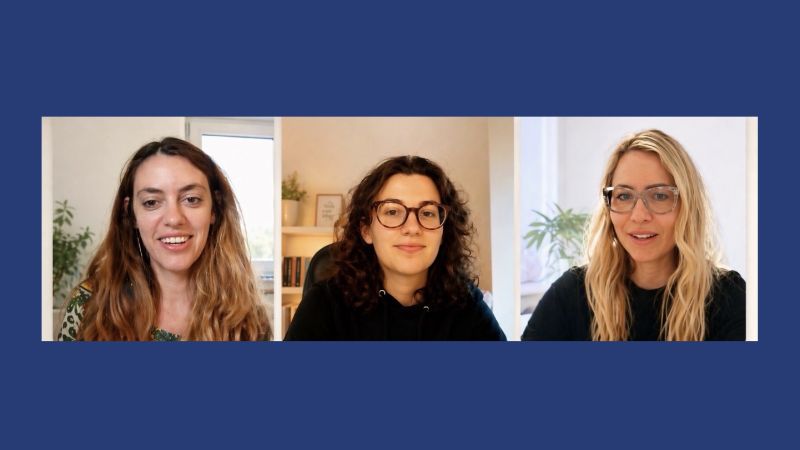
On Wednesday, 22 April 2026, as part of the preparatory activities for the implementation of the research to be conducted in Rome (Istituto comprensivo Munari di Roma), within the framework of the activities of the Research Centre for the Linguistic and Cultural Heritage of Istria at the Faculty of Humanities of the Juraj Dobrila University of Pula, Dr Renata Martinčić Marić (Faculty of Educational Sciences of the University of Pula) and Dr Nada Poropat Jeletić (Faculty of Humanities of the University of Pula) delivered an online specialised workshop dedicated to the testing methodology that will be employed at the Roman research site. The workshop was aimed at the precise alignment of research procedures, the standardisation of administration and the planning of assessment protocols in order to ensure the methodological consistency and comparability of the data collected within the international scientific research project Neurocognitive Abilities and Early Bilingual Development: Language Exposure and Executive Functions (NeuroLEEF).
The workshop was devoted to a detailed examination of the procedures for administering the Multilingual Assessment Instrument for Narratives (MAIN), the Sentence Repetition Task (SRT) and the Automated Working Memory Assessment (AWMA), with particular emphasis on the consistency of examiner instructions, the sequencing of tasks, the methods for recording responses and the need for rigorously controlled administration in a multilingual context. Within the discussion of MAIN, particular attention was drawn to its importance in assessing the comprehension and production of narrative structures, whereas, in relation to the SRT and AWMA tasks, special emphasis was placed on the standardized administration of repetition and working memory tasks as important indicators of linguistic processing, verbal memory, and cognitive processing in children.
The workshop’s particular value lay in its immediate operational function: it enabled the alignment of the research team in advance of the fieldwork phase, clarified all key methodological issues and further strengthened examiner reliability within an international research environment. Among others, the workshop was attended by Giorgia Mazzetti, a student from University Roma Tre, who had been undertaking an exchange period at the Faculty of Humanities of the Juraj Dobrila University of Pula and who will also take part in the forthcoming field research in Rome. Her participation further attests to the international and collaborative dimension of the research activities, as well as to the importance of involving early-career researchers in the implementation of empirical studies in multilingual and interdisciplinary contexts.


Faculty of Humanities in Pula
A: Negrijeva 6, 1. kat
52 100 Pula
Hrvatska
T: +385 (52) 877 436, 099 5342 557
F: +385 211 713
E: ffpu-ured@unipu.hr
W: ffpu.unipu.hr


 Pristupačnost