


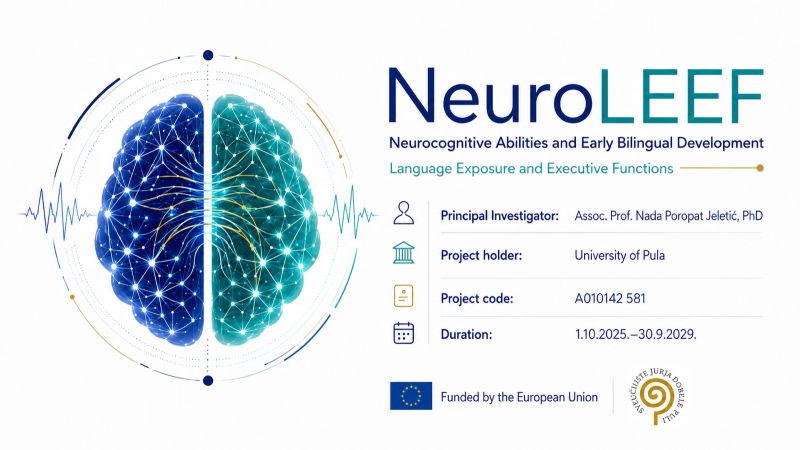
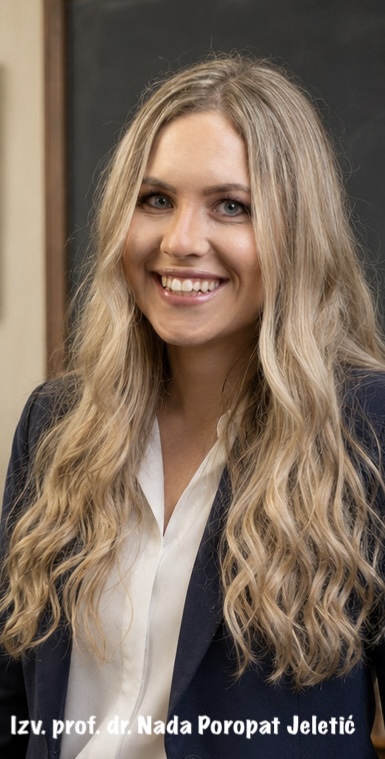
From October 2025 to June 2026, field research was conducted in Istria and Rijeka within the framework of the international scientific research project Neurocognitive Abilities and Early Bilingual Development: Language Exposure and Executive Functions — NeuroLEEF, led by Associate Professor Nada Poropat Jeletić director of the Research Centre for the Linguistic and Cultural Heritage of Istria. The project is carried out at Juraj Dobrila University of Pula and is funded by the European Union. The research activities conducted to date have involved the following elementary schools: Giuseppina Martinuzzi Pula-Pola, Edmondo De Amicis Buie-Buje, Kaštanjer Pula, Veruda Pula and Dolac Rijeka.
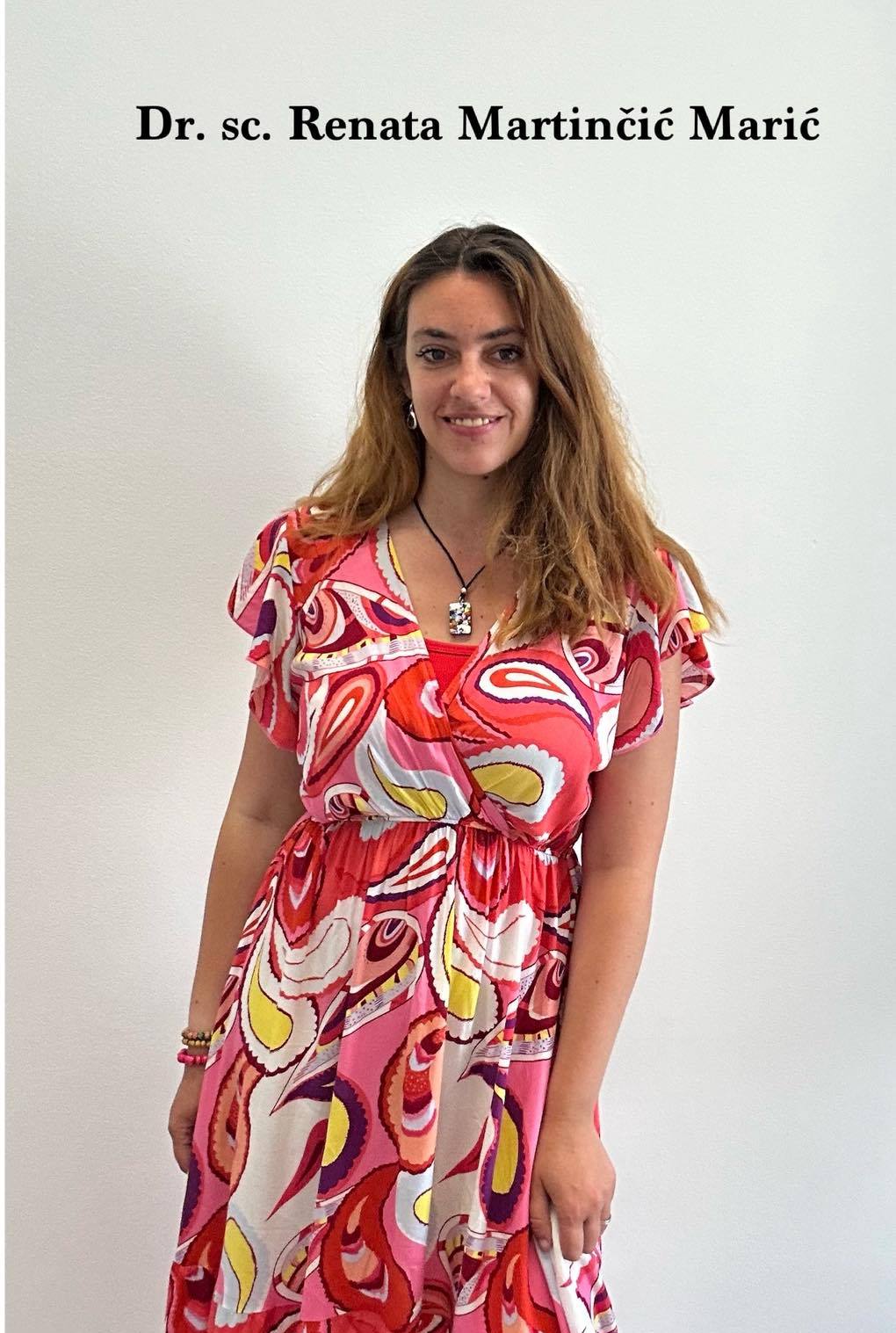
Within the framework of the study, a series of standardized linguistic and cognitive instruments was administered with the aim of assessing various aspects of children’s language development, narrative abilities, lexical competence, working memory, and executive functions. Among the instruments employed is the NEPSY-II — A Developmental Neuropsychological Assessment, designed to assess relevant neuropsychological and executive functions, while the Peabody Picture Vocabulary Test (PPVT) is used to evaluate receptive vocabulary. Furthermore, the Multilingual Assessment Instrument for Narratives (MAIN) was administered in order to assess the comprehension and production of narrative structures, that is, to gain insight into the ways in which children organize, reproduce, and interpret narrative material. The Sentence Repetition Task (SRT) enables the assessment of sentence repetition ability as an indicator of language processing, syntactic competence and verbal memory, whereas the Automated Working Memory Assessment (AWMA) is used to evaluate components of working memory. The field research was carried out with the participation of Dr Renata Martinčić Marić, from the Faculty of Educational Sciences of the University of Pula and Professor Nada Poropat Jeletić, from the Faculty of Humanities of Pula. Special thanks are extended to the school principals who made it possible for pupils to participate in the research: Professor Luka Brussich, Principal of the Italian Elementary School Giuseppina Martinuzzi in Pula; Professor Nada Crnković, Principal of the Elementary School Kaštanjer in Pula; Professor Anita Mokorić Brščić, Principal of of the Elementary School Veruda in Pula, Professor Samira Laganis, Principal of the Italian Elementary School Edmondo De Amicis in Buje and Professor Dunja Kučan Nikolić, Principal of the Italian Elementary School Dolac in Rijeka. Their openness to scientific collaboration enabled the implementation of research activities in the school environment, in full compliance with pedagogical, ethical and organizational standards. The collaboration with schools is of particular importance for the Juraj Dobrila University of Pula, as it contributes to strengthening scientific and educational ties and to the development of empirically grounded approaches to education within bilingual and multilingual communities. A significant contribution to the implementation of the project was made by alumnae of the University of Pula who participated in participant recruitment and in coordinating cooperation with schools: Professor Arlene Kauzlarić Ocovich from the Italian Elementary School Edmondo De Amicis in Buje, Professor Helga Cukon from the Elementary School Veruda in Pula and Professor Ilenia Matticchio from the Italian Elementary School Giuseppina Martinuzzi in Pula. Their involvement confirms the importance of maintaining lasting ties between the University and its alumni, demonstrating how scientific projects can also develop through long-term professional, educational and institutional cooperation. Teachers Dario Petrović from Dolac Italian Elementary School in Rijeka, and Nevena Starčević and Igor Mihovilović from Kaštanjer Elementary School in Pula, also participated in the recruitment of participants and in the organization of research activities in schools; sincere thanks are extended to them for their support, collaboration, and organizational contribution.
The research activities also involved students of the University of Pula, including Ela Ester Zorić, a student of the Primary Teacher Education Programme in Italian at the Faculty of Educational Sciences in Pula; Chiara Giacometti, a student of the Preschool Education Programme in Italian at the Faculty of Educational Sciences in Pula; Federica Natale, an Erasmus student in the Primary Teacher Education Programme in Italian at the Faculty of Educational Sciences in Pula; Nikea Cafolla, a student of the Department of Italian Studies at the Faculty of Humanities in Pula; as well as Erika Čurić, Ema Tomaić and Vanessa Tomišić, students of Italian Language and Culture and of Culture and Tourism at the Faculty of Humanities in Pula and the Faculty of Economics and Tourism “Dr. Mijo Mirković”. A specific segment of the research concerns the transcription of narrative production collected through the MAIN instrument using the CLAN (Computerized Language Analysis) software, which enables the systematic processing and analysis of children’s spoken language. Data transcription was carried out by Morena Osman and Lucia Tisa Ciković, students of the Department of Italian Studies and the Department of English Studies at the Faculty of Humanities in Pula, as well as by Dea Trkulja, from the Department of Italian Studies of the same Faculty. The involvement of students in testing and transcription confirms the educational dimension of the project, particularly with regard to the inclusion of young researchers in empirical and interdisciplinary scientific studies.


Faculty of Humanities in Pula
A: Negrijeva 6, 1. kat
52 100 Pula
Hrvatska
T: +385 (52) 877 436, 099 5342 557
F: +385 211 713
E: ffpu-ured@unipu.hr
W: ffpu.unipu.hr


 Pristupačnost