


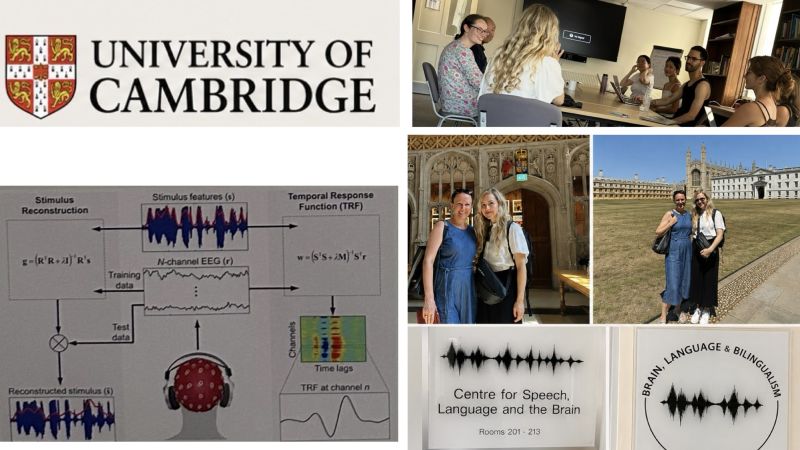
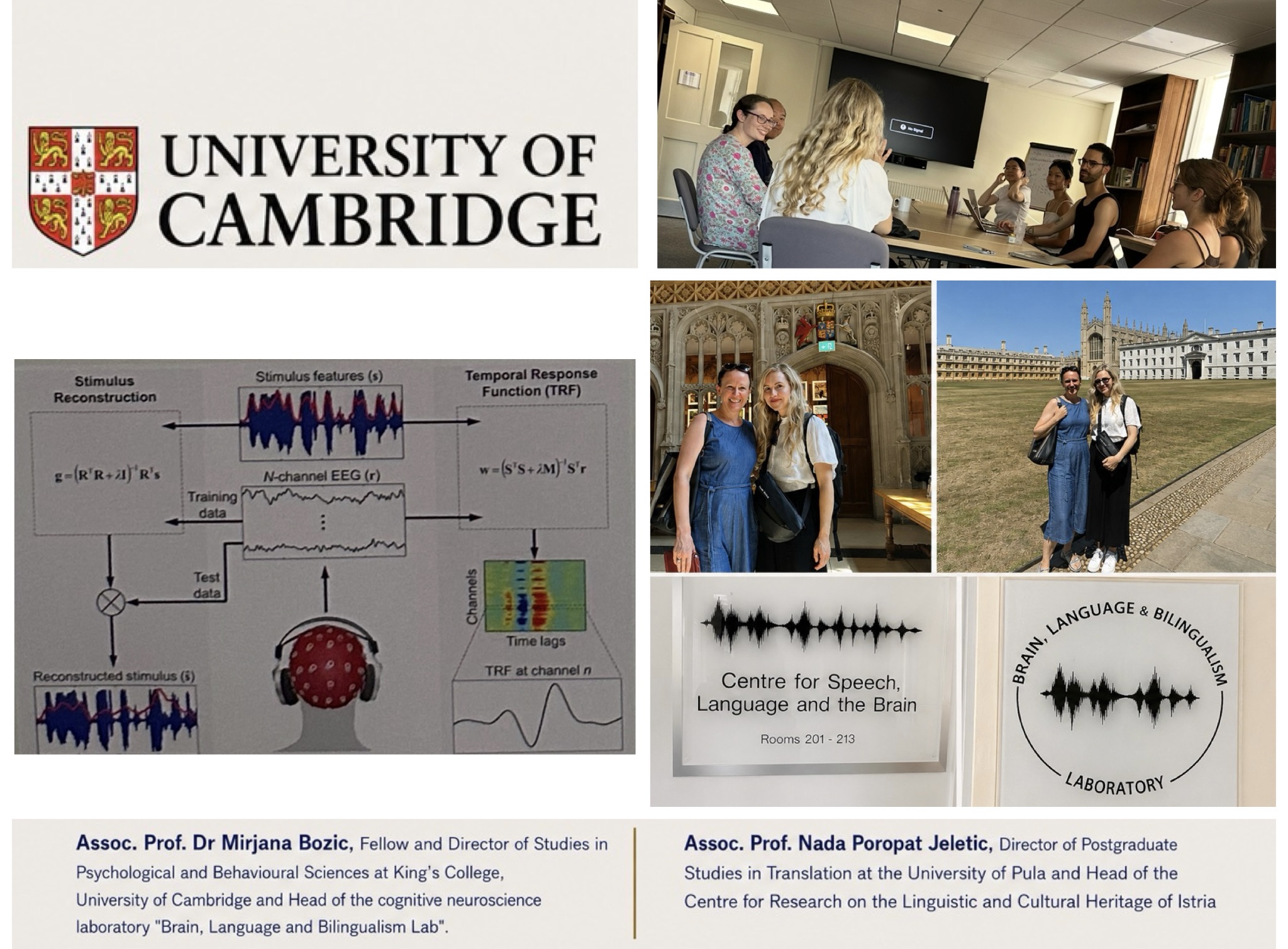
Associate Professor Nada Poropat Jeletić held the position of Visiting Research Associate at the University of Cambridge from the 6th April to the 31st October 2026. Within the framework of this research appointment, she participated in the scientific activities and research meetings of the project Mapping the Predictors of L2 Grammar Proficiency in Adolescence, under the academic supervision of Associate Professor Mirjana Božić (Fellow and Director of Studies in Psychological and Behavioural Sciences at King's College, University of Cambridge; Head of the Brain, Language and Bilingualism Lab within the Department of Psychology at the University of Cambridge) and in professional development programs in scientific research (Neural Mechanisms of Second Language Processing: From Local Activation to Whole-Brain Dynamics; Eye-Tracking for Language and Education Research; The Varied Roots of Quirky Sign Ordering in Indic Orthographies; World Endangered Languages: Global Writing Diversity, etc.). During her research stay, Associate Professor Nada Poropat Jeletić contributed to the meetings of the Brain, Language and Bilingualism Lab, internationally recognized as one of the leading research centers in the fields of cognitive neuroscience of language, bilingualism and neurodevelopment. The laboratory's research programme is dedicated to advancing the understanding of the cognitive and neural mechanisms underlying language comprehension and production, as well as the neuroplastic adaptations associated with the acquisition, processing and use of two or more languages. Through the integration of behavioural, psycholinguistic and neuroimaging methodologies, the laboratory investigates the neural architecture of language processing and examines the impact of bilingualism and multilingualism on the functional organization of cognitive systems. Particular emphasis is placed on the neural encoding of speech in early and late bilinguals, together with comparative investigations of attentional, executive and linguistic processes in bilingual and monolingual populations. As part of her international scientific dissemination activities, Professor Poropat Jeletić presented the research project Neurocognitive Abilities and Early Bilingual Development: Language Exposure and Executive Functions (NeuroLEEF), funded by the European Union. The project addresses fundamental questions in bilingualism research, language development and developmental cognitive neuroscience, with particular emphasis on the development of executive functions in childhood, including inhibitory control, cognitive flexibility, task switching, divergent non-verbal thinking and working memory. The research appointment at the University of Cambridge substantially strengthened the international profile of the NeuroLEEF project while fostering scientific networking and institutional collaboration. The undertaken activities provide a robust foundation for the development of future collaborative research initiatives, joint scientific projects and long-term international cooperation with the University of Cambridge.


Faculty of Humanities in Pula
A: Negrijeva 6, 1. kat
52 100 Pula
Hrvatska
T: +385 (52) 877 436, 099 5342 557
F: +385 211 713
E: ffpu-ured@unipu.hr
W: ffpu.unipu.hr


 Pristupačnost